

A Thai study of 555 vocational students found low cannabis knowledge and health literacy after 2022 decriminalization, with implications for schools.

A cross-sectional survey of 555 Thai vocational students found that 55.0% had low cannabis knowledge and 48.8% had low cannabis health literacy after Thailand’s June 2022 decriminalization, according to the study published in the Journal of Cannabis Research.
One institution, 555 valid responses
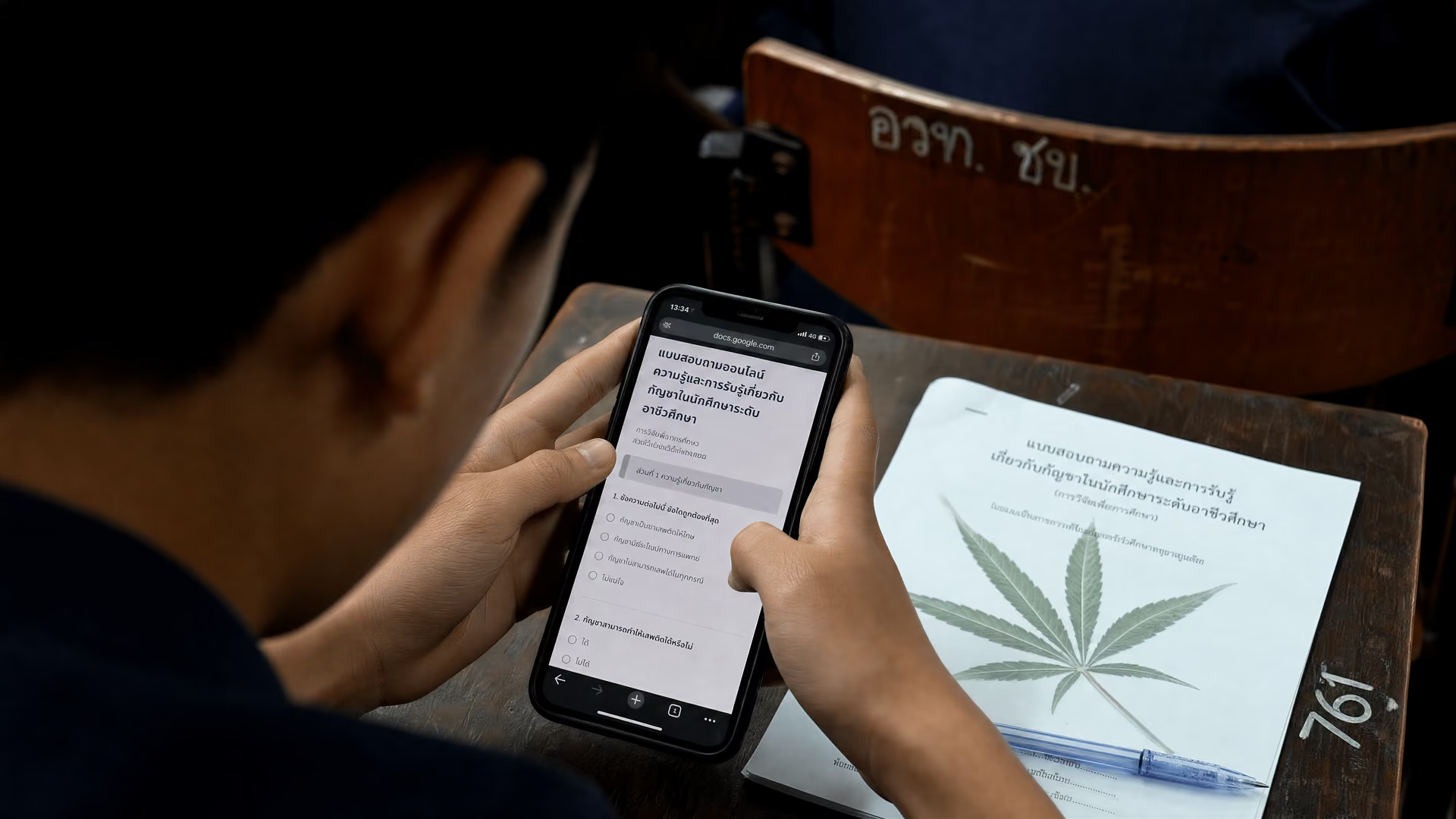
The study examined vocational secondary students at one vocational institution in a province in northeastern Thailand. Researchers conducted an online survey from January to March 2024, inviting all 2,656 eligible students. A total of 555 students provided valid responses, producing a response rate of 20.9%.
The researchers used two separate 15-item instruments: one measuring cannabis knowledge and another measuring cannabis health literacy. They then used bivariate analysis and three multivariable regression models to examine knowledge scores, health literacy scores and cannabis use experience. The design can identify relationships between the measured factors, but it cannot establish that one factor caused another or show how scores changed over time.
The Springer Nature page identifies the paper as an unedited early-access manuscript that will undergo further editing before final publication. That notice is relevant when interpreting the findings, although the reported sample, measures and headline results are clearly set out in the published abstract. The study’s central figures are:
The setting of the survey is important because the results describe a defined group of vocational students rather than Thai students as a whole. A national estimate cannot be drawn from one institution, and the response rate means the students who answered may not represent everyone who was eligible.
An editorial reconstruction of the study setting could show:
Knowledge and health literacy were both low
The knowledge results were weak overall. The mean cannabis knowledge score was 7.23 out of 15, with a standard deviation of 4.43; 55.0% of respondents were classified as having low knowledge. The mean cannabis health literacy score was 41.72 out of 75, with a standard deviation of 12.72, and 48.8% were classified as having low health literacy.
The two headline measures can be set out side by side:
| Measure | Instrument | Mean score | Students classified as low | Source |
|---|---|---|---|---|
| Cannabis knowledge | 15 items | 7.23/15 | 55.0% | Study on Thai vocational students |
| Cannabis health literacy | 15 items | 41.72/75 | 48.8% | Study on Thai vocational students |
The difference between the two percentages should not obscure the broader finding: low performance was common on both measures. The study does not present the result as a question of whether students had heard of cannabis. Instead, it points to limitations in what students knew and how effectively they could handle health information connected with it.
The proportion classified as low was substantial on both measures:
Share of surveyed students with low scores (%)
Knowledge did not automatically become health literacy
The study found no statistically significant association between knowledge level and health literacy level. The reported result was χ2[4] = 7.04, with p = 0.134. In practical terms, the data did not show that students classified at one level of factual knowledge were necessarily classified at a corresponding level of health literacy.
That distinction is the study’s most important public-health message. The authors treat health literacy as more than the ability to recall facts, recommending stronger skills in critical appraisal, communication, self-management and digital health literacy. A student may encounter information without having the tools to judge its reliability, communicate about health concerns or make informed decisions. The paper expresses the point directly:
Factual knowledge alone may not translate into functional cannabis health literacy.
Study authors
For schools, the finding argues against treating a single information session or knowledge test as a complete measure of preparedness. The research supports a broader approach in which students learn how to assess claims and sources, ask questions, communicate with trusted people and manage health information in digital environments.
The distinction also limits what can be inferred from the mean scores. A lower knowledge score does not by itself describe a student’s ability to seek help or evaluate information, just as a stronger factual score does not prove that those wider skills are present.
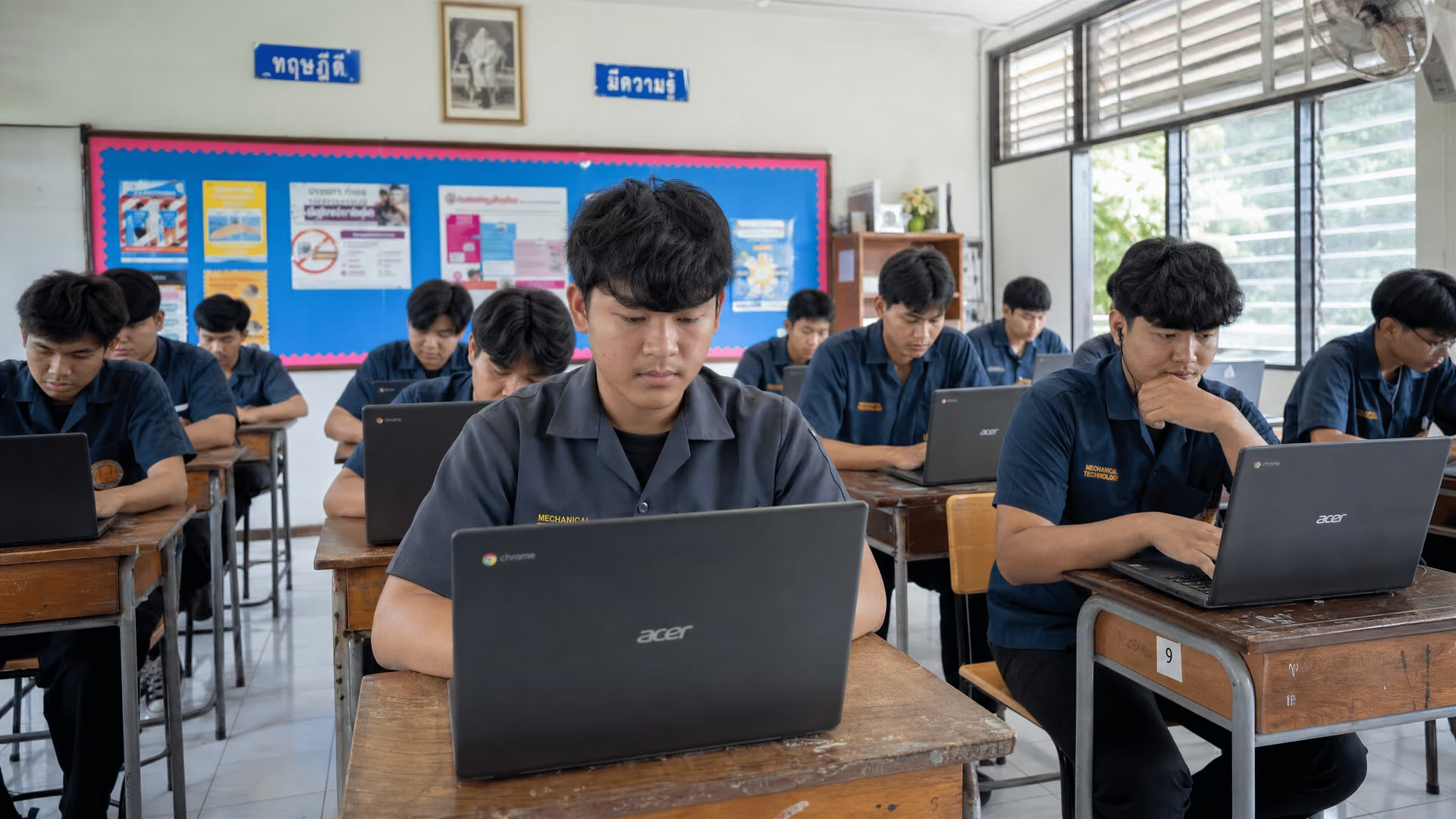
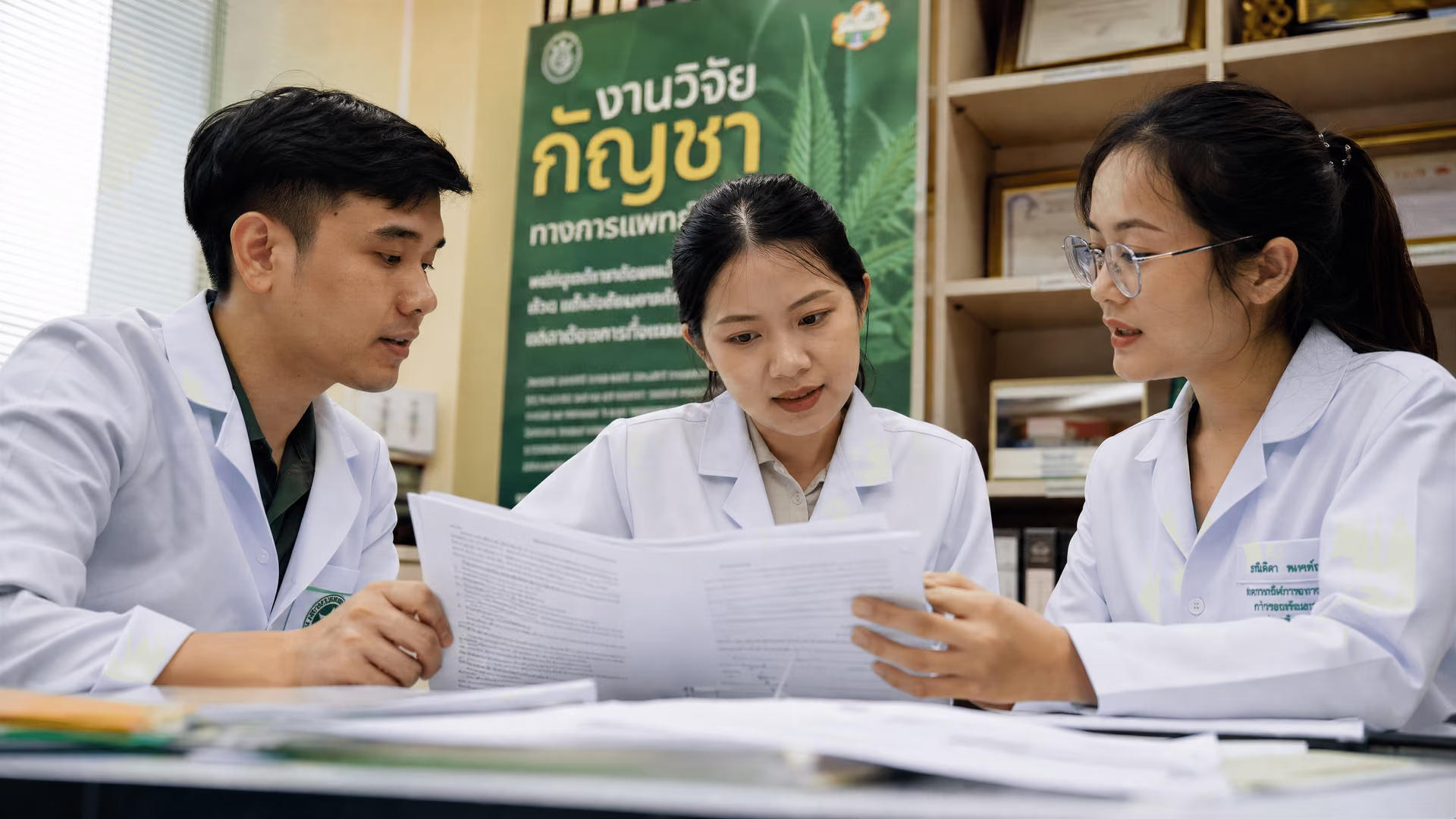
A second editorial reconstruction could illustrate the research process without presenting the students or findings as a national sample:
Prior education was associated with stronger scores
The adjusted analyses identified several factors associated with the two score types. Prior cannabis education and other substance use were associated with higher knowledge scores. Male sex and Year 3 enrollment were associated with lower knowledge scores. For health literacy, prior cannabis education and family relationship quality were associated with higher scores, while male sex showed only a weak adjusted association with lower health literacy.
Use experience showed a different pattern
The model examining cannabis use experience produced a separate set of associations. The reported odds ratios were:
- Other substance use: OR 4.115.
- Prior cannabis education: OR 3.683.
- Male sex: OR 2.621.
- Year 2 enrollment: OR 1.733.
- Family relationship quality: OR 1.558.
These figures should be read as associations within the surveyed sample, not as predictions about an individual student and not as evidence that any listed factor caused cannabis use experience. The cross-sectional design records conditions and responses during the study period; it cannot determine which came first.
The relationship involving prior education is particularly important for interpretation. Education was associated with higher knowledge and health literacy scores, but it was also associated with cannabis use experience in the relevant model. The data alone cannot explain that overlap. Students may encounter education for different reasons, and the survey was not designed to test the timing or content of educational exposure.
Family relationship quality appeared in both the health literacy and use-experience analyses. The authors do not present this as a simple protective or harmful label. Rather, it identifies the social environment as a factor that may matter alongside formal instruction, a point that could influence how schools communicate with students and families.
The findings land in a changing Thai policy landscape
The study places its question in the period after Thailand’s June 2022 decriminalization, which the authors say substantially increased adolescent exposure. That policy background does not make the survey a legal analysis, but it explains why knowledge and health literacy became urgent questions for vocational schools.
Thailand’s current framework should not be confused with the Spanish members-only club model. Cannabis is sold through licensed dispensaries under Thai law, while the policy materials supplied for this report describe an evolving system in which sales and related activities require authorization. The government has reiterated that cannabis is not fully legalized, and the supplied policy reporting says cannabis flower is subject to strict controls.
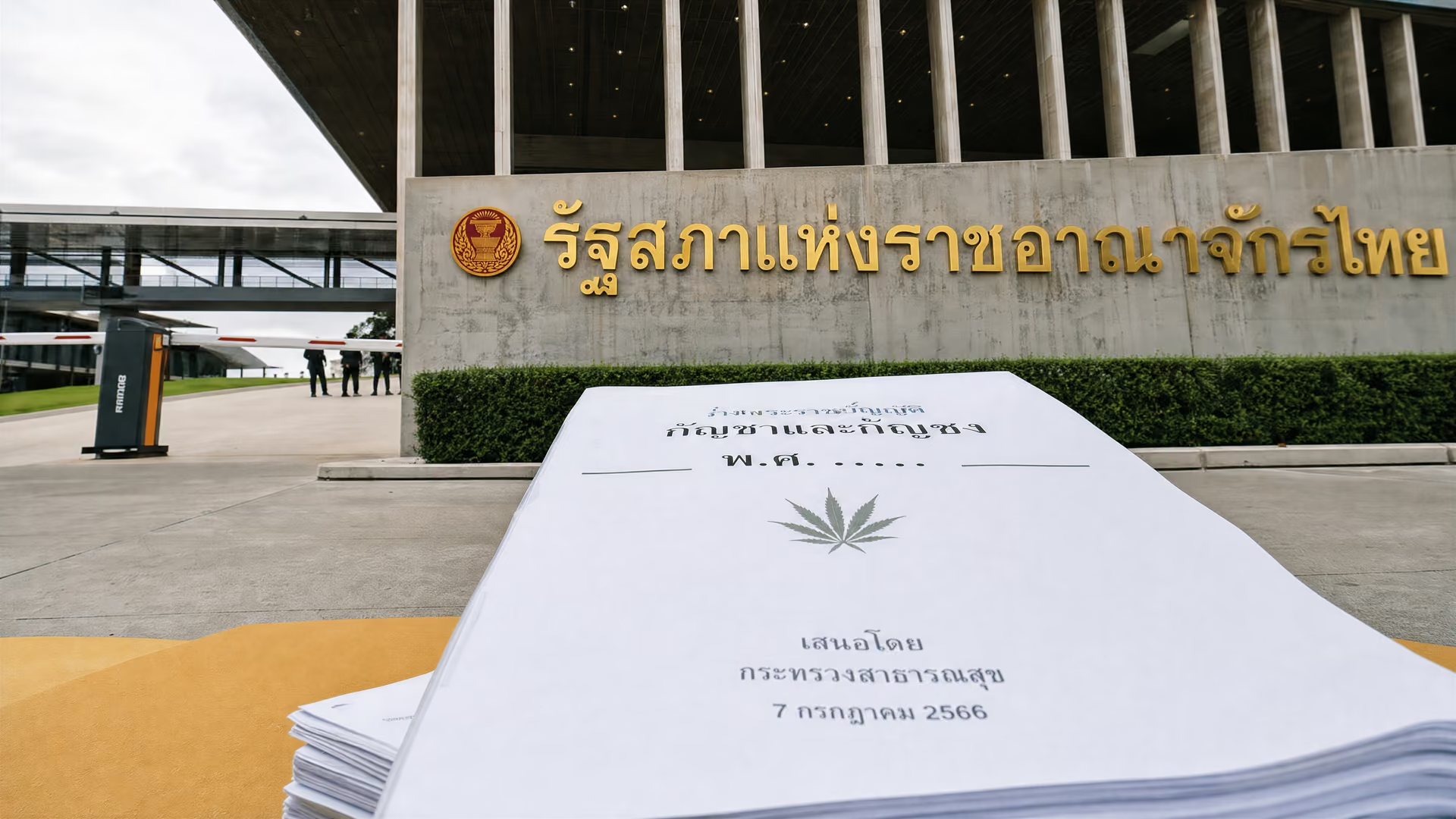
A proposed Cannabis and Hemp Act would restrict cannabis to medical use, require cannabis shops to operate under clinical supervision and extend controls to cultivation. The government also sought public feedback on the cannabis-and-hemp bill. These developments are proposals and policy positions, not grounds for describing cannabis as broadly unrestricted. They do, however, reinforce the study’s argument that students need reliable health information while the rules continue to evolve.
The relevant policy and research milestones are:
For readers trying to connect the policy debate with the research, the key point is:
What schools can take from the evidence
The authors call for school-based interventions that respond to the gap between factual knowledge and functional health literacy. Their recommendations focus on skills that can be applied across changing information environments:
- Teach students to critically appraise health claims and digital sources.
- Strengthen communication skills so students can discuss cannabis-related health questions responsibly.
- Develop self-management skills rather than relying only on factual recall.
- Include digital health literacy in school-based education.
- Give particular attention to male students, students without prior cannabis education and students with other substance use experience.
The recommendations do not amount to a claim that one curriculum will fit every vocational institution. They follow from the specific patterns in this sample: prior education was associated with higher knowledge and health literacy, but knowledge and health literacy were not significantly linked to one another. Any intervention would therefore need to measure more than whether students can answer factual questions.
What the study cannot answer
The survey offers a useful snapshot, but its limitations define the boundaries of the story. It does not compare students before and after June 2022, does not establish a national prevalence of low knowledge or health literacy and does not show whether the relationships observed would appear in other provinces or educational settings.
The main reader questions are therefore answered cautiously:
Questions about the Thai vocational student study
Does the study represent all Thai vocational students?
No. It surveyed students at one vocational institution in a province in northeastern Thailand. Of 2,656 eligible students, 555 provided valid responses.
Does the study prove that the 2022 policy change caused low health literacy?
No. The survey was cross-sectional and cannot establish causation or measure changes over time. It examines students during the period following the policy change.
Does prior cannabis education guarantee stronger health literacy?
No. Prior education was associated with higher health literacy scores, but the study did not find a statistically significant association between knowledge level and health literacy level.
What does the study recommend for schools?
The authors recommend school-based interventions that build critical appraisal, communication, self-management and digital health literacy, with attention to the groups identified in the adjusted analyses.
Taken together, the findings point to four grounded conclusions:
The Thai study does not settle how every vocational student understands cannabis, nor does it measure the effect of any single policy. It does show that, in one northeastern institution, factual knowledge and practical health literacy were both limited after the 2022 policy change—and that improving one cannot be assumed to improve the other. As Thailand’s cannabis rules continue to develop, the evidence supports education that helps students assess information and communicate about health, not information campaigns built on recall alone.
Sources
- Farmer killed after tractor overturns into Ayutthaya canal (khaosodenglish.com)
- Former Japanese idol leaves group and launches career on adult platform (khaosodenglish.com)
- Thai Economy Slows in Q2 as Energy Costs and Travel Disruptions Hit Tourism (thaienquirer.com)
- Thai Enquirer News Summary – July 31, 2026 (thaienquirer.com)
- Thailand cannabis draft law targets medical use and shop controls (nationthailand.com)
- Government emphasizes cannabis is not fully legalized; ministry strictly controls flower buds (en.thairath.co.th)
- Thailand’s Wellness Ambitions Threatened by Research ‘Valley of Death’ (nationthailand.com)
- Thailand’s Cannabis and Hemp Act Revived: The July 2026 Draft (cannabisforthailand.com)
- Government Continues to Gather Feedback on Cannabis and Hemp Bill Until 1 July (en.thairath.co.th)