
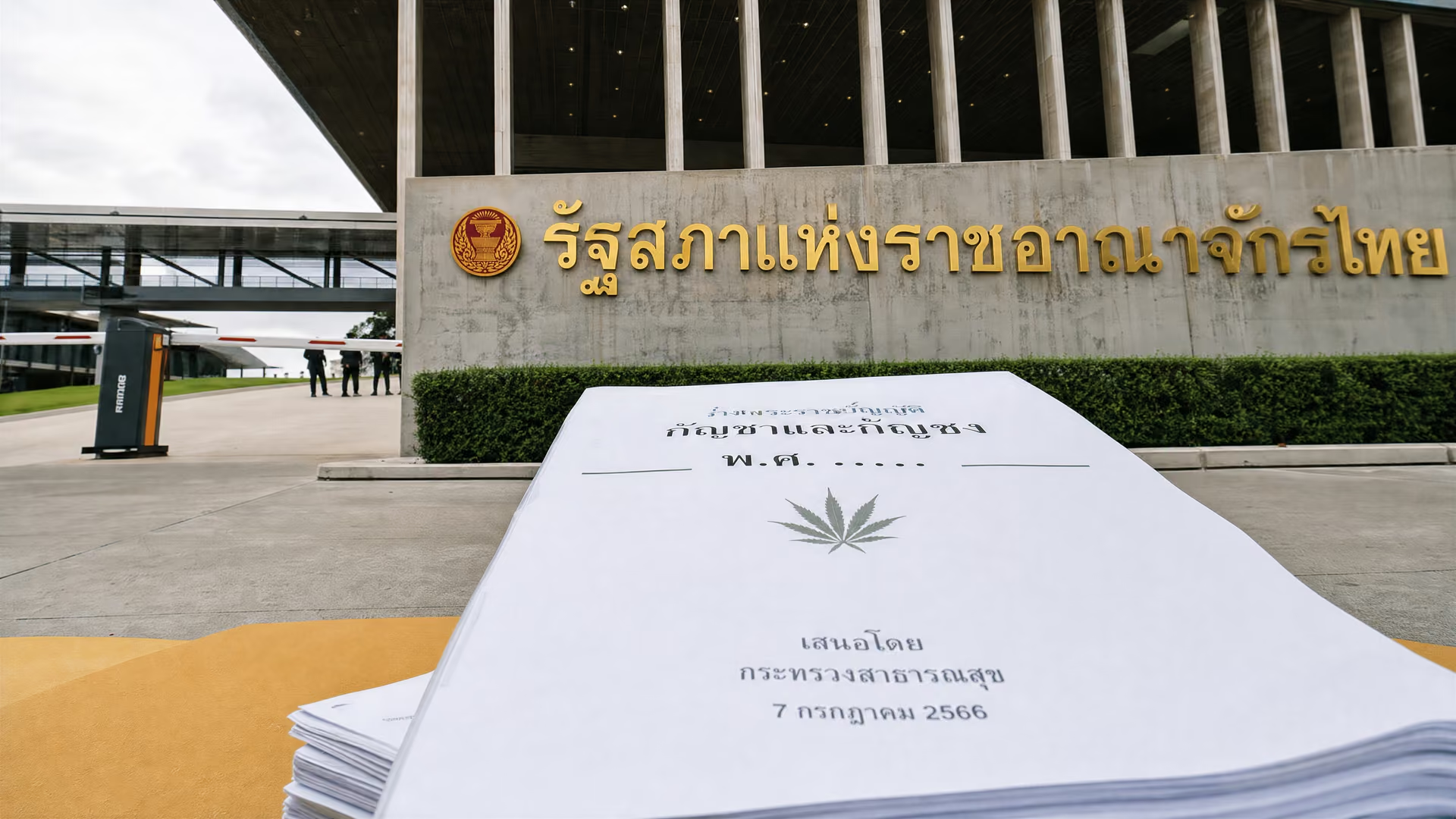
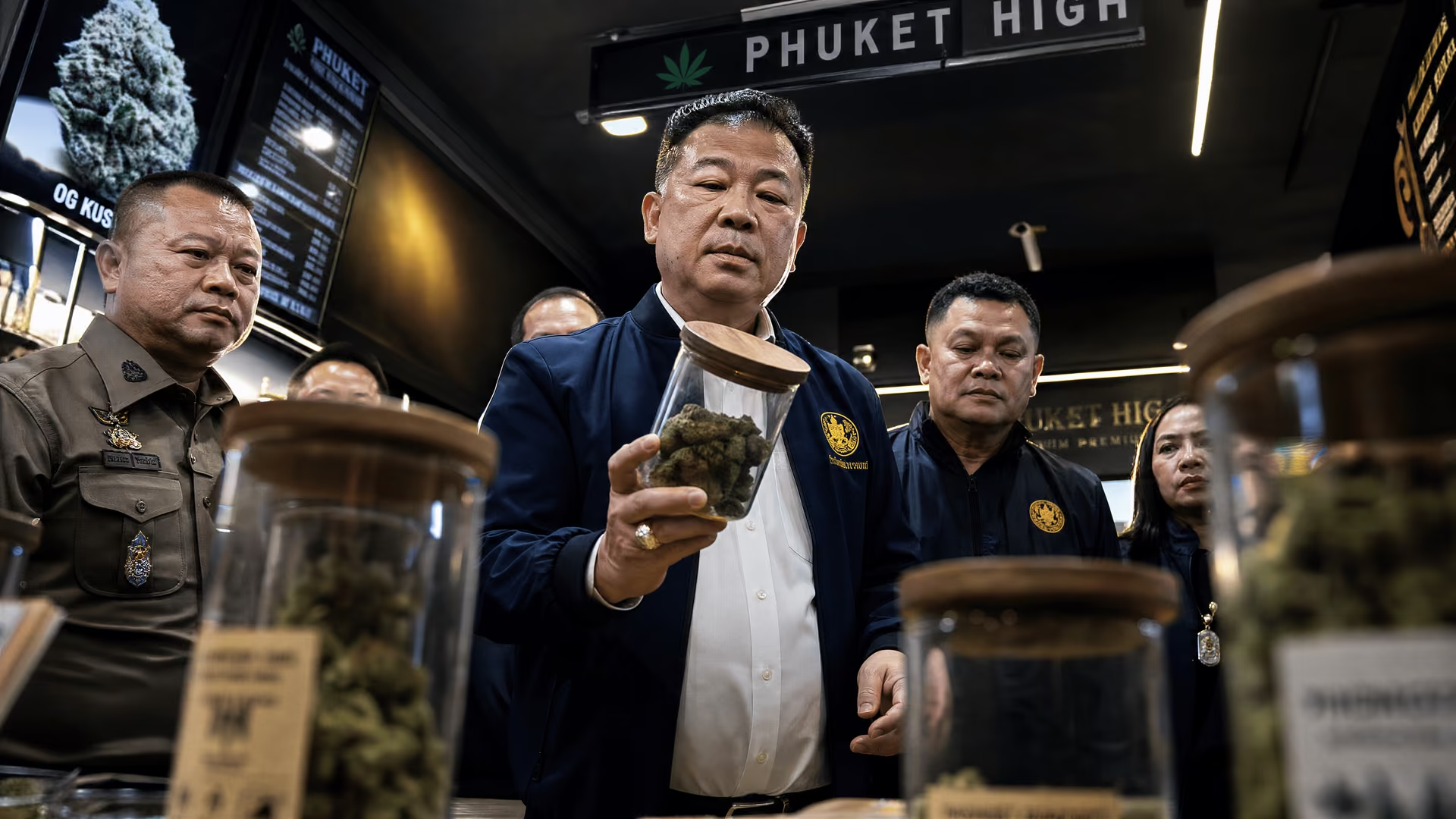


Thailand’s draft Cannabis and Hemp Act would limit cannabis to medical use, require doctor-supervised dispensaries and expand controls to cultivation and

Thailand’s Public Health Minister Pattana Promphat advanced a draft Cannabis and Hemp Act on July 7, 2026, proposing medical-use-only controls, doctor-supervised dispensaries and regulation from cultivation through sale. The Nation report on Thailand’s draft cannabis law says the measure would eliminate recreational sales, require cannabis shops to operate as medical facilities and strengthen action against unlicensed outlets and fake permits. The bill has completed a public consultation but has not yet been deliberated in the current parliamentary session, meaning the proposed controls are not enacted law. Thailand’s licensed dispensary framework remains governed by the current herbs legislation and ministerial regulations while the legal position continues to evolve.
The draft law is moving forward but is not yet in force
Pattana said the government and the Bhumjaithai Party support medical cannabis only. The draft Cannabis and Hemp Act is expected to go before Parliament, but the minister said it did not reach deliberation during the current session. That distinction is central for dispensaries, residents and visitors: the proposed medical-only system remains a legislative plan, while enforcement is already being tightened under existing rules and ministerial orders.
The bill’s immediate background includes a public consultation completed early last month, followed by the minister’s instruction to accelerate controls over outlets, licences and the movement of cannabis. The reported sequence is:
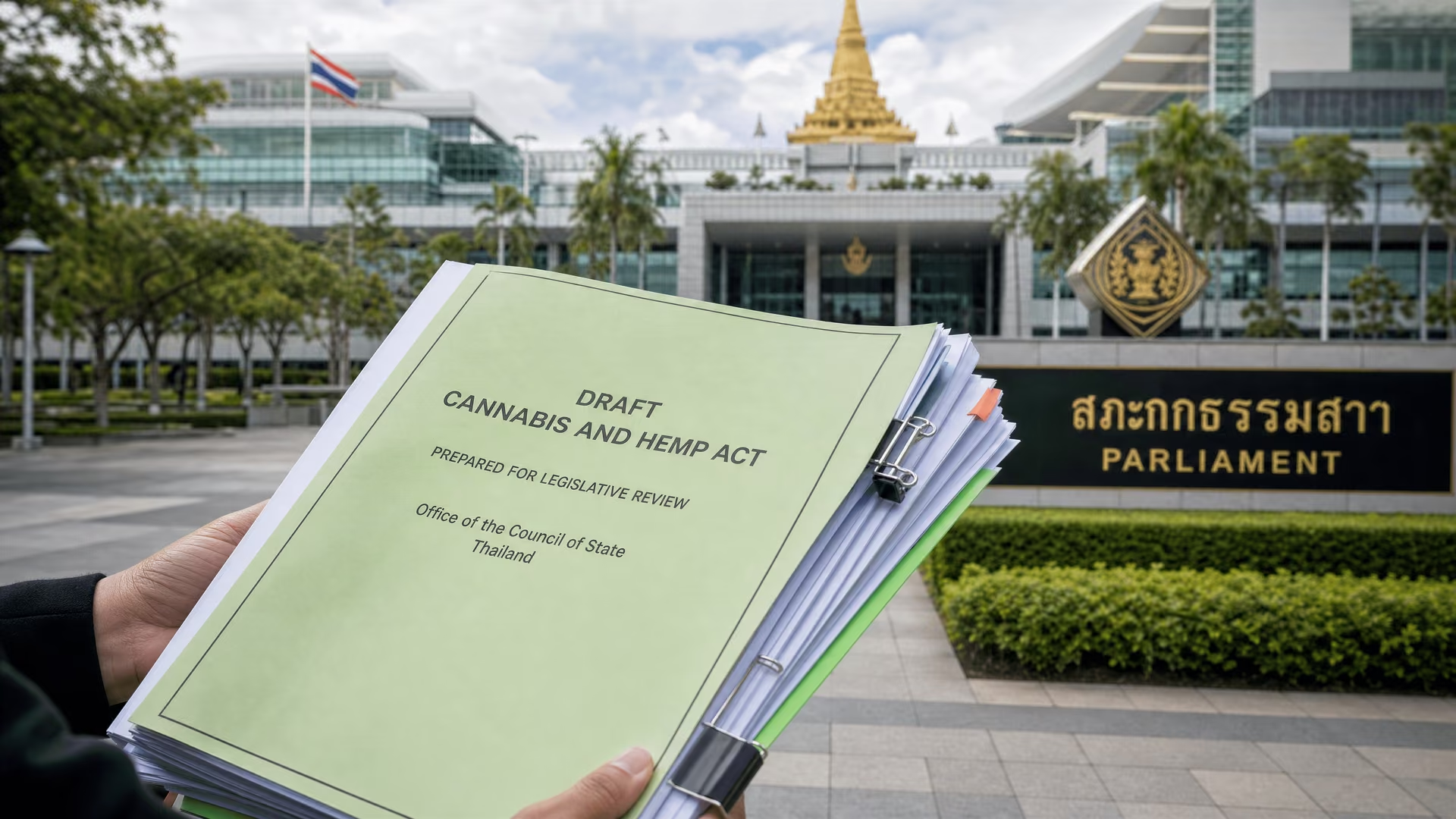
The legislative stage will determine how the proposed controls are written into Thai law. Until then, the ministry’s enforcement measures and amended ministerial regulations remain separate from the final content of the bill. The parliamentary documents and public-health oversight at the centre of the proposal can be represented by this scene:
Pattana also said any move to return cannabis to narcotics status would have to be considered separately. That process would likely fall under narcotics law supervised by the Ministry of Justice, while the public health ministry is currently pursuing the control bill first.
Medical supervision would redefine licensed dispensaries
The proposed model would shift Thailand’s licensed cannabis outlets toward a formal medical-facility structure. Properly registered shops would have to adjust under amended ministerial regulations, become medical facilities and have doctors stationed on site to supervise dispensing to people who need cannabis for medical purposes.
From commercial outlet to supervised facility
The change is intended to make medical justification and professional oversight part of the outlet’s operating framework. Pattana said the controls would also help prevent large quantities from being repeatedly supplied to the same person. Where that pattern appears, officials would be expected to examine the case and take legal action if irregularities are found.
A supporting account of the proposed medical-use and shop controls similarly describes a system built around medical access, licensing and operational requirements rather than unrestricted retail sales. The proposal therefore concerns Thailand’s licensed dispensary sector under Thai law, not a members-only club model.
Both the Bhumjaithai Party and the government had a policy of medical cannabis only.
Pattana Promphat, as reported by The Nation
The precise wording of the final statute remains unsettled because Parliament has not yet deliberated on the bill. However, the direction set out by the minister is clear: outlets that continue operating for recreational sales, or that operate without proper registration, are intended to face enforcement action.
Cultivation would enter the regulated chain
The most significant structural change in the draft is its proposed coverage of cultivation. Pattana said the current framework relies on the Act on the Protection and Promotion of Thai Traditional Medicine and related ministerial regulations. Those rules regulate sales, transfers and extraction, but do not yet cover the cultivation stage.
The draft would extend oversight closer to the source and impose what the minister described as relatively high and serious penalties for violations. That would give the authorities a broader legal basis for tracing cannabis through the chain rather than focusing mainly on the point of sale.
The main difference between the framework described as operating now and the proposed expansion is set out below:
| Control area | Current framework described | Proposed or ordered change | Source |
|---|---|---|---|
| Cultivation and supply chain | Sales, transfers and extraction are regulated, while cultivation is not yet covered. | The draft would control cannabis from cultivation and strengthen oversight from source to destination. | Thailand cannabis draft law targets medical use and shop controls |
| Shop operation | Outlets operate under permissions and ministerial requirements that are subject to inspection and expiry. | Properly registered outlets must adjust into medical facilities with doctors supervising dispensing. | Thailand cannabis draft law targets medical use and shop controls |
The supply-chain emphasis also responds to concerns about cannabis leaving Thailand illegally. Pattana noted that although cannabis is not currently classified as a narcotic in Thailand, it remains a narcotic in many destination countries. Any movement across borders must therefore comply with the law of the destination country as well as Thai requirements.
The Department of Thai Traditional and Alternative Medicine has been coordinating with the Customs Department and Airports of Thailand over large-scale illegal exports. Pattana said fake licences had been used in some cases, prompting the department to send licences electronically only as an additional control. He acknowledged that some cases could still escape detection when the volume involved is large.
Thousands of outlets are already under enforcement pressure
The ministry’s enforcement push is aimed at two overlapping but distinct problems: outlets operating without proper authorisation and licensed outlets whose permissions have expired. Pattana said more than 6,000 illicit or unlicensed shops were estimated to be operating nationwide. Separately, he provided figures showing how quickly the licensed outlet network is moving through its renewal cycle.
The outlet figures reported by the minister are not all the same category, but together they show the scale of the licensing and enforcement task:
Reported cannabis outlet figures in Thailand (outlets)
Pattana said there had been 18,000 outlets since 2023. About one-third, or around 6,000, expired at the end of 2023, while around 1,500 renewed their licences. Because each licence is granted for one three-calendar-year period, around 6,000 outlets a year are due to expire in 2026 and 2027.
The figures do not mean that every expired outlet is automatically an illicit outlet, nor that every unlicensed operation belongs to the same group. They describe different enforcement concerns: the first is unauthorised operation, while the second is the continuing need to verify whether outlets have renewed and complied with the rules attached to their permissions.
GPS records will help officials identify authorised outlets
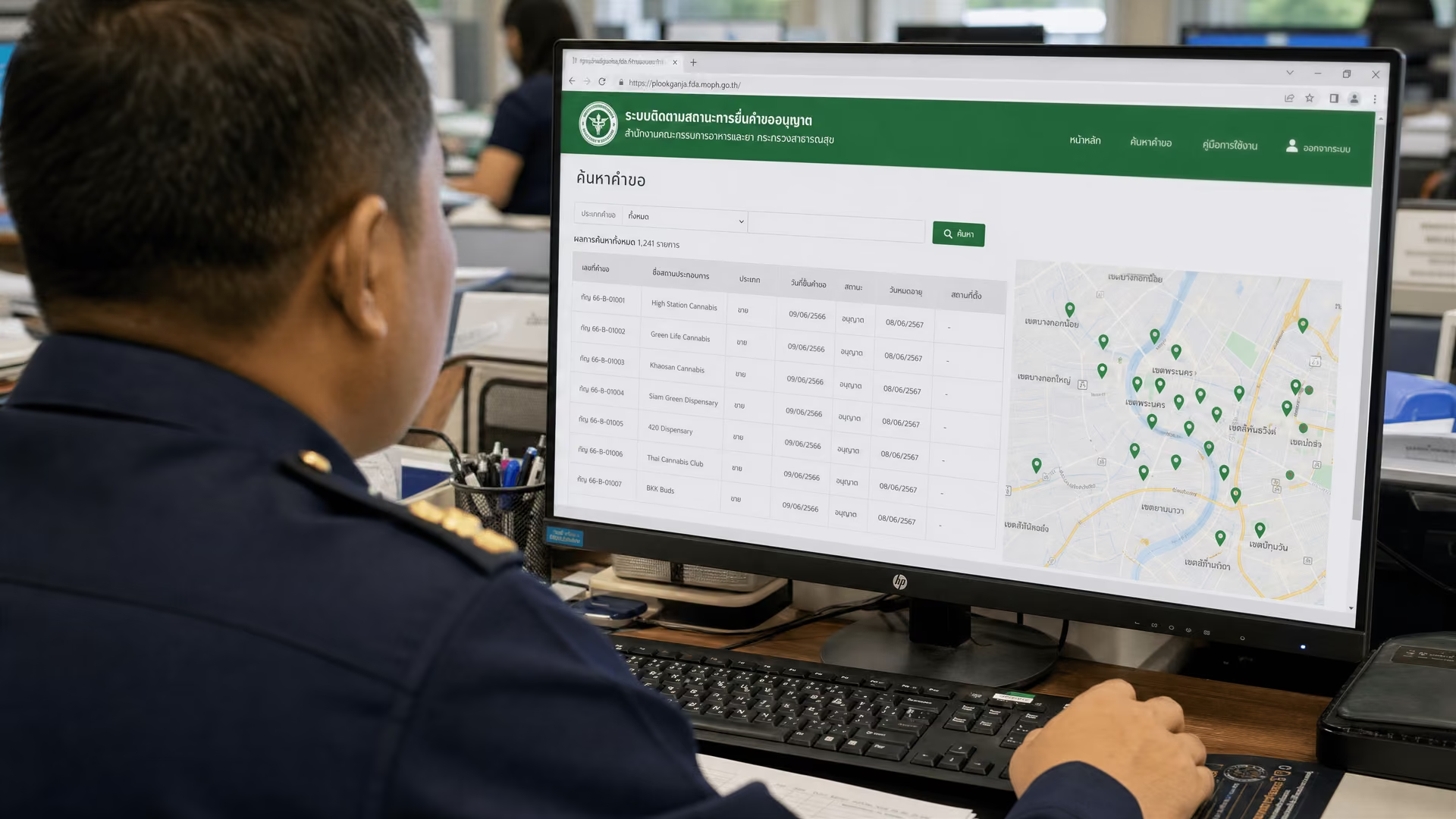
The Department of Thai Traditional and Alternative Medicine has placed properly registered outlets on its website and pinned their GPS coordinates. The records also show when each licence expires. Pattana said an outlet that is not listed in the relevant categories is considered not properly registered, allowing operators to face immediate arrest action.
The Ministry of Public Health has also expanded the pool of authorised officers able to inspect and make arrests. Police and local administrative organisations have been included, bringing the number of authorised personnel into the tens of thousands. The enforcement tools now being used include:
- A public website listing properly registered outlets.
- GPS coordinates for outlets recorded by the traditional and alternative medicine department.
- Licence-expiry information to help identify permissions that have lapsed.
- Inspection and arrest powers for police, ministry officials and local administrative organisations.
- Immediate enforcement against outlets that are not registered or have not sought authorisation.
The verification system gives the authorities a practical way to connect an outlet’s physical location with its registration status. A news photograph illustrating that system would show the official records and location data being checked rather than presenting cannabis as a consumer product:
The Office of the Narcotics Control Board has separately warned retailers that controlled cannabis sales remain subject to Ministry of Public Health prescription requirements. That warning reinforces the ministry’s position that the existing framework already contains conditions, even before Parliament considers the broader draft law.
The final legal position still depends on Parliament
Thailand’s cannabis policy is therefore moving on two tracks. The Ministry of Public Health is tightening outlet checks, licence verification and medical supervision under existing authority, while the draft law seeks to establish a wider statutory framework covering cultivation and tougher penalties.
The unresolved question is whether Parliament will approve the bill and, if so, whether its final provisions will match the minister’s current description. The proposal would restrict cannabis to medical purposes and remove recreational sales from the legal framework, but it has not yet completed parliamentary deliberation.
Cross-border activity adds another layer of risk. Pattana said Thai authorities must consider the laws of destination countries because cannabis may be treated as a narcotic abroad. A Thai permit would not, on the facts provided, settle the legality of transporting cannabis into another country.
Questions the draft leaves open
The facts currently established by the ministry answer several practical questions, while leaving the bill’s final legislative outcome undecided:
Thailand cannabis draft law: key questions
Has Thailand’s medical-only cannabis bill become law?
No. The draft completed a public consultation and was expected to go before Parliament, but it had not been deliberated in the current session.
Would the proposed law regulate cultivation?
Yes. Pattana said the draft would control cannabis from the cultivation stage, which is not covered by the current framework described in the report.
What would happen to properly registered cannabis shops?
They would have to adjust under amended ministerial regulations and operate as medical facilities with doctors stationed there to supervise dispensing.
How can an outlet’s registration be checked?
The Department of Thai Traditional and Alternative Medicine has listed properly registered outlets online, including GPS coordinates and licence-expiry details. Outlets not listed are considered not properly registered under the minister’s description.
Has cannabis already been returned to narcotics status in Thailand?
The report does not say that this has happened. Pattana said the control bill must first be completed, while any return to narcotics status would likely fall under narcotics law supervised by the Ministry of Justice.
For now, the position set out by Thailand’s public health authorities can be reduced to these points:
Thailand’s next cannabis policy phase will depend on how the draft law is handled by Parliament and how the Ministry of Public Health applies its interim controls. The direction announced by Pattana Promphat is a move away from an open retail model toward medical supervision, tighter licensing and oversight that begins at cultivation and extends across borders. Until the bill is enacted, however, the current rules, ministerial regulations and enforcement actions remain the basis for determining whether an outlet is authorised to operate.
Sources
- Farmer killed after tractor overturns into Ayutthaya canal (khaosodenglish.com)
- Former Japanese idol leaves group and launches career on adult platform (khaosodenglish.com)
- Thai Economy Slows in Q2 as Energy Costs and Travel Disruptions Hit Tourism (thaienquirer.com)
- Thai Enquirer News Summary – July 31, 2026 (thaienquirer.com)
- Thailand cannabis draft law targets medical use and shop controls (nationthailand.com)
- Thailand Unveils Draft Cannabis Law Targeting Medical Use, Shop Controls (cannintel.com)
- ‘Pattana’ Affirms No ‘Neutral Gear’ Policy, Highlights Four-Dimensional Cannabis Control Strategy (en.thairath.co.th)
- กรมการแพทย์แผนไทยฯ เดินหน้าร่าง พรบ.ควบคุมกัญชา ฉบับใหม่เสร็จสมบูรณ์ เสนอ รมว.สธ. แล้ว (hfocus.org)
- Top Bhumjaithai Party figure defends the party’s position on cannabis. Only supported medical use (thaiexaminer.com)
- Thai Customs launches new UK partnership to stop cannabis trafficking (pattayamail.com)